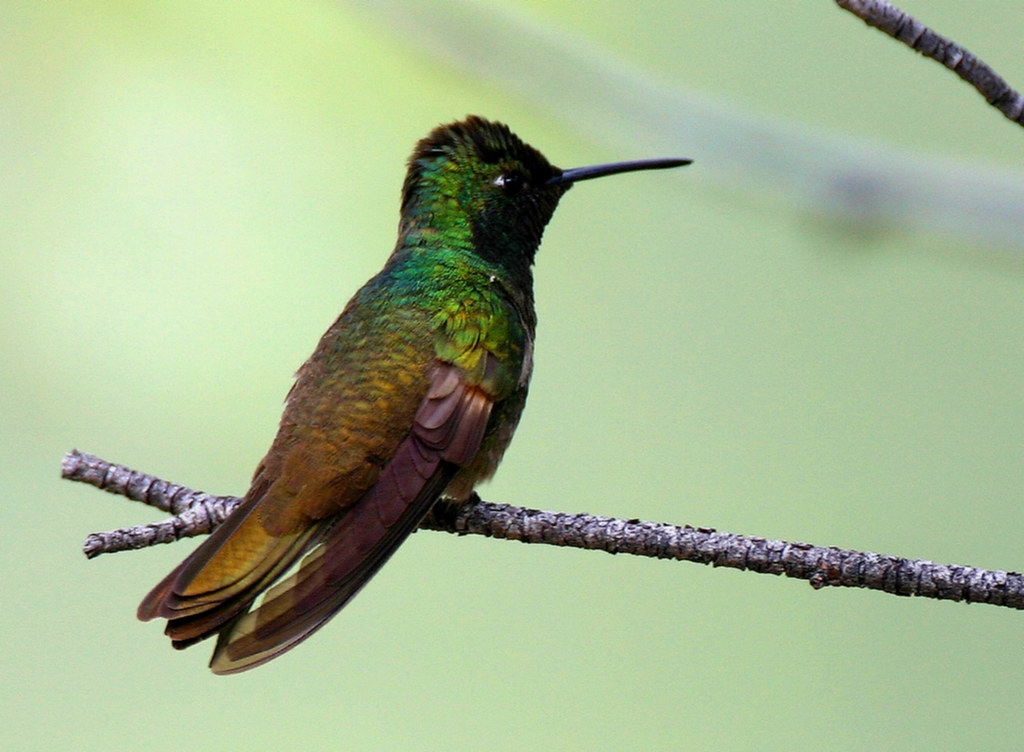

The Berylline Hummingbird, known scientifically as Saucerottia beryllina, is a striking member of the hummingbird family. Originally classified under Amazilia, a 2014 study revealed the need for taxonomic reshuffling due to the polyphyletic nature of its former genus. Now placed in Saucerottia by most taxonomies, this bird still holds onto its roots, with some systems keeping it in Amazilia.
Subspecies Spotlight This shimmering bird boasts five subspecies:
- S. b. viola
- S. b. beryllina
- S. b. lichtensteini
- S. b. sumichrasti
- S. b. devillei
Each brings a unique twist to this species’s dazzling colors and habitats.
Physical Characteristics
Adult males typically show off a bronze-green to coppery dazzle on their head, back, and rump with tail colors ranging from coppery to rufous, while females sport similar hues but with slightly paler shades on their throat and belly.
Where They Hang Out: Distribution Details
While these birds are primarily found across Mexico and Central America, they have been making appearances in Arizona—adding a touch of exotic flair to local biodiversity! From Sonora down to Oaxaca and even into parts of Guatemala and Honduras, these birds choose varied landscapes from dense forests to scrublands.
Living Their Best Life: Behavioral Patterns
Though largely sedentary throughout most of their range, some northern populations migrate southward for winter—a fact that might explain their occasional visits up north into Arizona!
Diet: What’s on the Menu?
Berylline Hummingbirds aren’t picky eaters; they love nectar from both native and introduced flowering plants across all forest levels! They’re also seen snatching up arthropods either in mid-flight or from spiderwebs—talk about versatile dining habits!
Breeding Basics
In regions like Oaxaca, these birds breed from June through October peaking in September—creating nests out of grasses bound with spiderweb adorned with lichens—a true natural marvel!
Vocal Vibes
Their songs vary but generally consist of high-pitched twittering notes mixed with lisping sounds—a delightful symphony if you’re lucky enough to hear it!
Conservation Status: No Current Worries
Listed as Least Concern by IUCN thanks to their large range and stable population estimated at around two million mature individuals.
So there you have it—the Berylline Hummingbird! Whether fluttering around Arizona or sticking closer to Central American roots, this bird remains an enchanting sight within the avian world.

